Public Participation in Environmental Protection in Jordan and Morocco

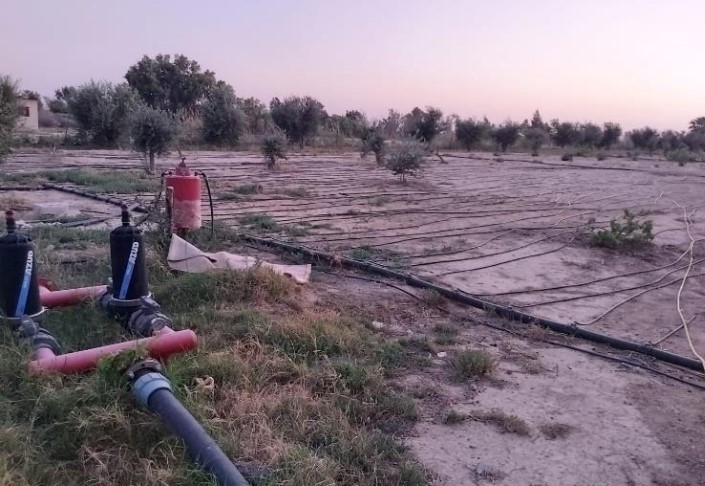
Caption: MIRRA irrigation project: Farm 2 after repairing the well and the preparations to plant crops on the land
Within the framework of a Small Grants’ project that the High Atlas Foundation administers in collaboration with the Bureau of Oceans and International Environmental and Scientific Affairs (OES), the U.S Department of State (DOS), to promote public participation in environmental decision-making, resulting in increased environmental protection and enforcement of environmental laws, 4 sub-grantees from Morocco and Jordan were selected through a call for applications from different associationsThe goal of this project is to increase civil society engagement in environmental protection and promote public participation in environmental decision-making, resulting in increased environmental protection and enforcement of environmental laws.The program promotes public awareness of Free Trade Agreement (FTA) Environment Chapters and national environmental laws. The United States-Jordan FTA and the United States-Morocco both stand as commitments by all three countries to promote environmental protection. The small grants program and the Environment Chapter both emphasize public participation—affording people the opportunity to learn about as well as contribute to environmental protection initiatives and policies. The Small Grants Program supports these efforts by engaging civil society to improve environmental protection and strengthen environmental laws.
The small grants were awarded for proposals focusing on educational and awareness-raising activities that engage a broad range of stakeholders and promote interactions between local authorities and civil society.

Public Participation in Environmental Protection in Morocco
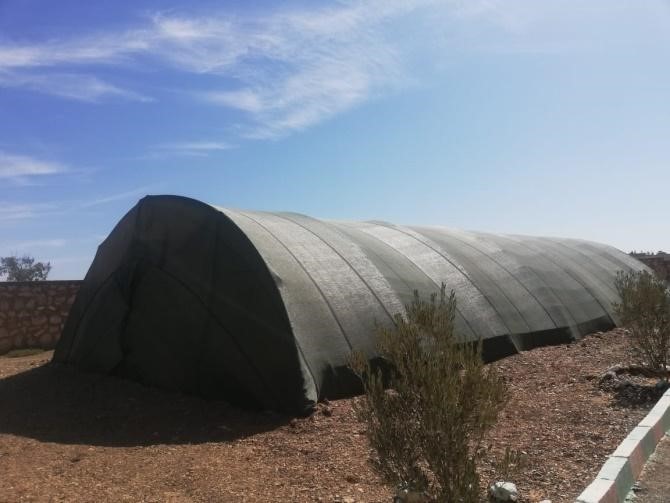
Caption: Alfath Association in Morocco is building a fruit tree nursery with a solar irrigation pump in Bouchane.
Among the 4 selected sub-grantees was Alfath Association for Development, a Moroccan CSO practicing in Bouchane and Ait Taleb, two rural villages in the Rhamna Province north of Marrakech. These villages are aware of the waste problems and air pollution they are facing, Together and with the participation of local authorities, schools, and parents of students they decided to develop programs to educate the citizens on how to solve these, and other, environmental issues.
Alfath association and its partners are working together to achieve the project’s objectives including the creation of a fruit tree nursery with a solar irrigation pump in Bouchane. Their goals is to grow over 100,000 olive and other trees, providing the Ait Taleb community solar pumps for two wells to be used for livestock water, and to also enable the reduction of air pollution and the elimination of the need for fuel, in addition to training students and their parents with the hopes of helping to establish a culture of environmental protection.
In cooperation with local authorities, Alfath was able to remove the traditional places locals were throwing waste, and instead take the waste to farmers to use as a fertilizer, improving the cleanliness of the area and helping the farms at the same time. One of the main deliverables of this project is a manual for each village to serve as a reference for measuring the development and the preservation of the environment.
As part of the OES program, HAF directly engaged 1,987 primary school children, 1,878 older youth, and 1,160 farmers in environmental action workshops that build knowledge around effective tree planting, clean water management, and participatory planning. These events – as part of HAF’s Sami’s Project – were also an opportunity to plant 15,144 trees as well as 445 medicinal plants and discuss clean water initiates with members of schools, cooperatives, and associations in 18 Moroccan provinces.
Despite the current COVID-19 crises in Morocco, Alfath is doing a very important job and will close the project in the next few months, hoping to have new project opportunities for the sustainability of its work and its impact.